
How to Visit Chinyero Volcano
Index
The mystery of the Chinyero Volcano
In the heart of Tenerife hides a place that combines history, nature and adventure: the Chinyero Volcano. This corner of the island not only attracts geology lovers, but also travelers who want to get to know a unique landscape shaped by the force of the earth. The Chinyero is not just any volcano; it is the last to erupt in Tenerife, a fact that makes it a true milestone in the collective memory of the islanders and a point of reference for those who wish to understand the volcanic essence of the Canary archipelago.
Visiting the Chinyero Volcano is much more than a hiking route: it means entering a protected natural environment, discovering the resilience of the flora and fauna after a volcanic episode and walking paths that still tell the story of an impressive natural phenomenon. Its strategic location, close to charming villages and other tourist attractions, makes it an ideal excursion for both those looking for adventure and for those who want a quiet plan in the middle of nature.
This article will guide you step by step in everything you need to know about the Chinyero Volcano: its history, how to get there, what routes to travel, what species inhabit the area and what practical recommendations to take into account to make the most of the visit. Thus, your stay in Tenerife will be completed with an unforgettable experience in this place where nature remembers its strength with each volcanic stone.
The latest volcano to erupt in Tenerife
The Chinyero Volcano holds a special title in the history of Tenerife: it was the last to erupt on the island. The event took place in November 1909 and lasted for ten days. Although it did not cause fatalities, it did generate great concern in nearby towns such as Santiago del Teide and Garachico, which watched with fear the advance of the lava flows. The eruption was engraved in the memory of the inhabitants, and even today the nights illuminated by fire and the constant roar of the earth are remembered.
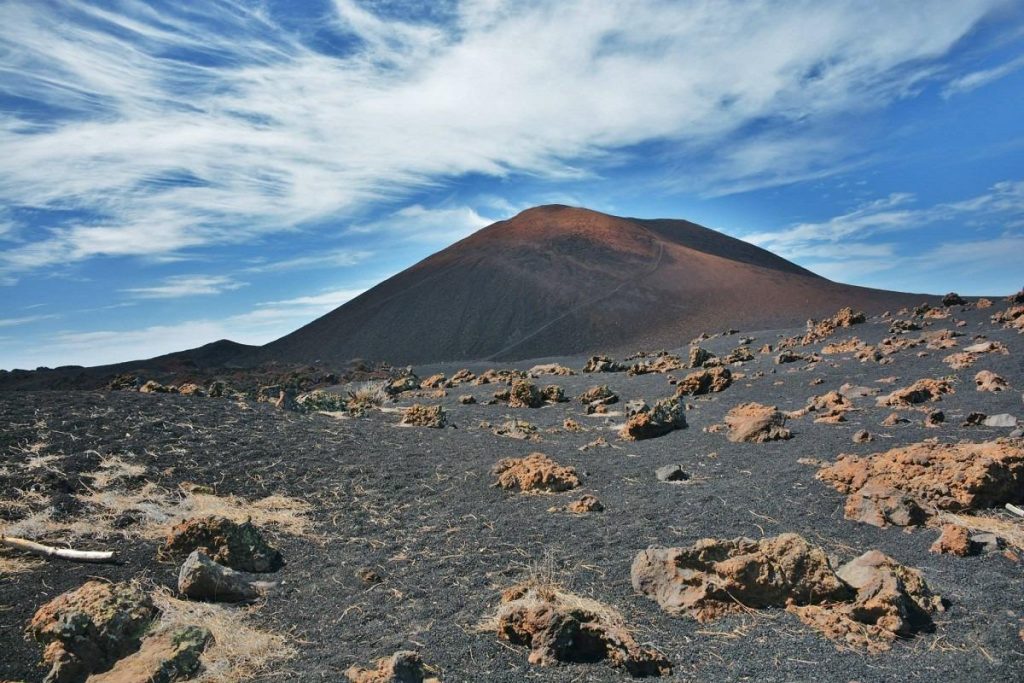
El Chinyero belongs to the Teide volcanic system and, unlike other volcanoes, has a well-defined cone about 60 meters high above the surrounding terrain. Its eruption marked the end of a volcanic cycle that shaped a large part of Tenerife and, today, it is studied by volcanologists as an example of a moderate Strombolian eruption.
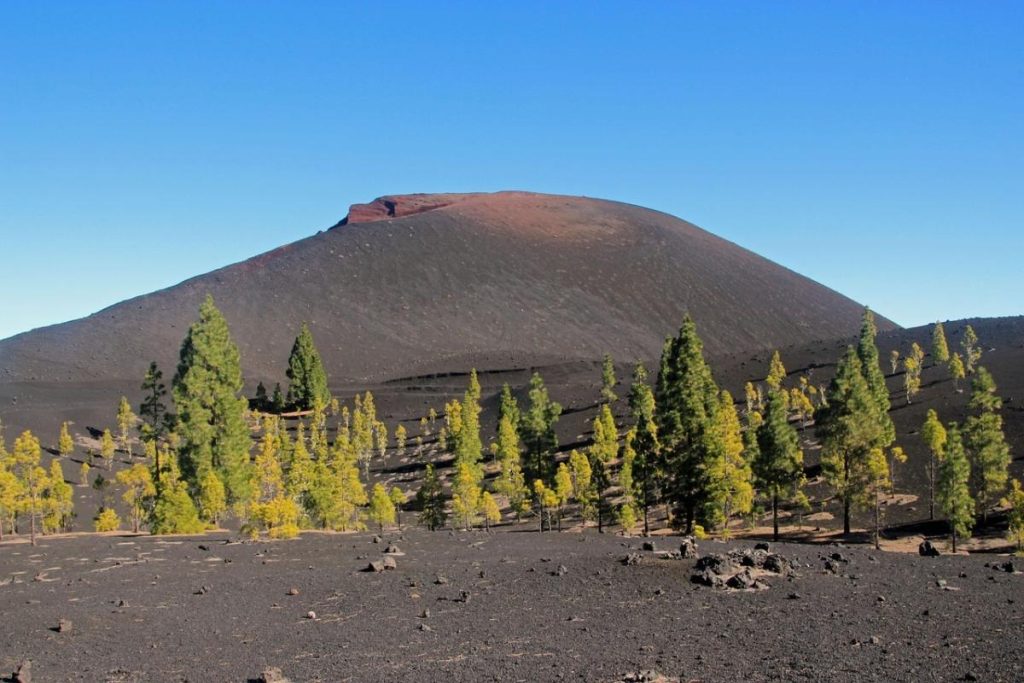
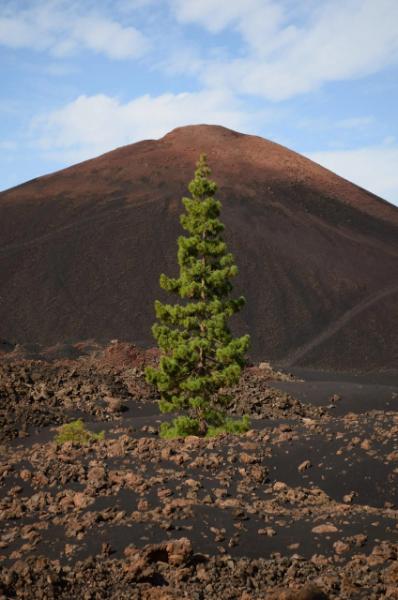
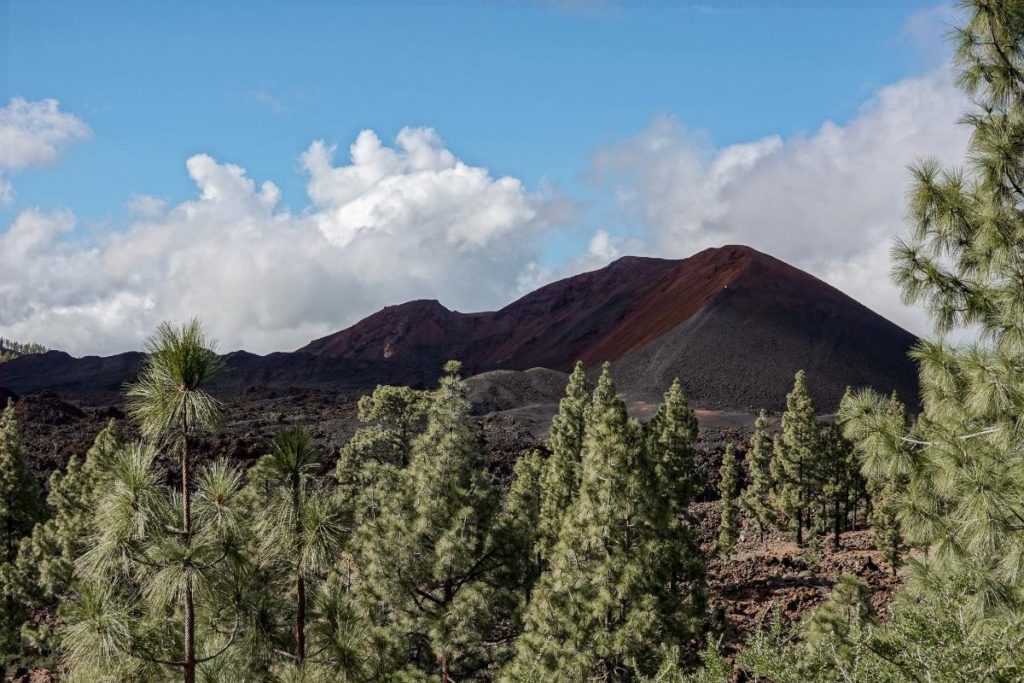
The most fascinating thing about the Chinyero Volcano is that its surroundings allow you to clearly appreciate the traces of the island’s volcanic past. The solidified lava, the dark and arid landscapes in contrast with the pine forests that have been recovering space, offer a unique visual spectacle. In addition, this place is part of the Chinyero Special Nature Reserve, declared in 1994 to guarantee the protection of an area of high geological, ecological and landscape value.
Knowing its history not only enriches the visit, but also helps to understand the importance of the volcano in the cultural identity of Tenerife and the role it plays in the island’s tourist offer.
Where is the Chinyero Volcano and how to get there?
The Chinyero Volcano is located in the northwest of Tenerife, within the Corona Forestal Natural Park and near the Special Nature Reserve that bears its name. Its privileged location places it a few kilometres from the municipality of Santiago del Teide and relatively close to the Teide National Park, which makes it an accessible stop for those who wish to explore the volcanic geography of the island.
Getting to Chinyero Volcano is easy both by rental car and public transport. From the south of Tenerife, the most direct access is via the TF-82 road, which connects towns such as Adeje and Santiago del Teide. From the north, it can be reached by the TF-5 and then connect with secondary roads towards the municipality. Many travellers choose to combine a visit to Chinyero with other nearby stops such as Los Gigantes or Teide itself.
The usual starting point for exploring the volcano is the Chinyero recreational area or the signposted accesses from Santiago del Teide. The trails are well signposted and have spaces to leave the car. For those who do not have a vehicle, there are guagua (bus) lines that reach the town, although the most comfortable option is still private transport or organized excursions.
Thanks to its location, the Chinyero is perfect for a half-day excursion or to be integrated into a wider route through the northwest of Tenerife. Its accessibility makes it a suitable destination for families and adventurers alike.

Hiking trails around Chinyero Volcano
The Chinyero Volcano is a paradise for hiking lovers. One of the best known routes is the Chinyero Circular Trail, approximately 7 kilometres long and of low-moderate difficulty. It is completed in about two hours and allows you to go around the volcanic cone, offering spectacular views of the lava flows, the pine forests and, on clear days, the Teide and La Gomera on the horizon.
This route stands out for its landscape contrast: the black of the solidified lava mixes with the intense green of the Canarian pines, creating a unique setting. Along the trail, interpretive panels explain the history of the eruption and the natural recovery of the environment, which enriches the experience.
Another option is to link up with routes that start from Santiago del Teide and reach the volcano, ideal for those looking for longer walks and deeper contact with nature. There are also guided excursions that include geological and ecological explanations, highly recommended for those who want to learn more about the volcanic formation of Tenerife.
Importantly, the circular trail is suitable for most visitors, including families with children accustomed to walking. Of course, it is recommended to wear suitable footwear, as the terrain is uneven and is composed of loose volcanic rock in some areas.
Hiking in the Chinyero Volcano is not only a physical exercise, but also a sensory experience: the silence, the smell of the vegetation and the energy of the volcanic landscape leave an indelible mark on those who walk through it.
Flora and fauna in the surroundings of the Chinyero Volcano
One of the most amazing aspects of the Chinyero Volcano is how life has thrived again in an environment that just over a century ago was covered by fiery lava. The vegetation has been recovering over time and today it is possible to observe an interesting combination of arid landscapes and pine forest areas that surround the volcanic cone.
The Canarian pine is the dominant species, famous for its resistance to fire thanks to its thick bark and its ability to regenerate. In addition, on the slopes and surroundings of the Chinyero grow plants adapted to the volcanic soil, such as the codesa, the tajinaste and different species of lichens that cover the rocks, giving color to an initially dark landscape.
Fauna, although discreet, is also present. It is possible to spot birds such as the Teide blue finch, an endemic species, as well as kestrels, blackbirds and partridges. Insects play a key role in pollinating the local flora, and attentive hikers will be able to observe blight lizards sunbathing among the volcanic stones.
This balance between the harshness of the landscape and the vitality of its inhabitants makes the visit a lesson in natural resilience. The Chinyero Volcano demonstrates how nature is capable of reinventing itself and how, with the passage of time, even the most inhospitable terrain is transformed into spaces full of life. For photography and nature lovers, this place offers endless opportunities to capture beauty in every detail.
Practical tips for visiting Chinyero Volcano
Planning your visit to Chinyero Volcano well is key to making the most of the experience. First of all, it is recommended to wear mountain or sports shoes with good soles, as the volcanic terrain is uneven and can be slippery. Comfortable, layered clothing is also essential, as temperatures in the area can vary depending on altitude and time of day.
There should be plenty of water, as there are no supply points along the route. Similarly, it is advisable to bring some light food to replenish energy during the walk. In terms of protection, sunglasses, a hat and sunscreen are essential, especially if the visit takes place in the middle of the day.
The circular trail is usually well signposted, but it is advisable to carry a map or use hiking apps for safety. If you are travelling with children, it is advisable to supervise them at all times, especially in areas with loose rocks.
Another important aspect is to respect the natural environment. The Chinyero Volcano is part of a protected reserve, so it is forbidden to leave the trails, pick up stones or plants and leave garbage. Maintaining the conservation of the site ensures that future generations can continue to enjoy this natural treasure.
Finally, it is recommended to start the route early in the morning to take advantage of the tranquility and avoid the heat. Thus, the visit to Chinyero will be a safe, comfortable and enriching experience.
Complementary tourism near Chinyero Volcano
One of the advantages of visiting the Chinyero Volcano is the possibility of combining the excursion with other nearby tourist attractions. Nearby is the municipality of Santiago del Teide, a charming village where you can taste typical dishes of Canarian gastronomy, such as wrinkled potatoes with mojo or local honey.
Also a few kilometres away is the Teide National Park, a UNESCO World Heritage Site, where visitors can ascend by cable car or explore other volcanic trails. Another option is to go to the coast and discover the impressive cliffs of Los Gigantes, a natural spectacle that perfectly complements the visit to Chinyero.
History lovers can head to Garachico, a town that was destroyed by the eruption of the Trevejo volcano in 1706 and is today famous for its natural pools. Also worth visiting is Icod de los Vinos, home to the famous Drago Milenario, one of Tenerife’s natural symbols.
For those who want to rest after the walk, the area offers rural accommodation and hotels that allow you to enjoy the tranquility of the surroundings. Integrating the visit to Chinyero into a broader itinerary provides the opportunity to get to know the cultural, gastronomic and landscape diversity of Tenerife, making the trip a complete and unforgettable experience.
Conclusion: why the Chinyero Volcano is a must-see in Tenerife
The Chinyero Volcano is not only a reminder of the last eruption in Tenerife; It is a symbol of the force of nature and the island’s ability to reinvent itself after such a powerful event. Visiting it means touring a landscape shaped by lava, admiring how life has flourished again in a hostile environment and connecting with a fundamental part of the geological history of the Canary Islands.
For travelers, the Chinyero represents the opportunity to live a unique experience: walking among volcanic flows, breathing fresh air in the middle of pine forests and discovering nearby villages full of tradition and flavor. Its easy access, its hiking trails suitable for different levels and its proximity to other attractions make it an essential destination on any trip to Tenerife.
By integrating the visit to the Chinyero Volcano into your itinerary, you will not only enjoy a different and enriching activity, but you will also take with you an indelible memory of the volcanic force that shaped the island. For all these reasons, this corner continues to be a natural and cultural treasure that deserves a prominent place on your adventure through Tenerife.