
Climbing Mount Teide: everything you need to know
Index
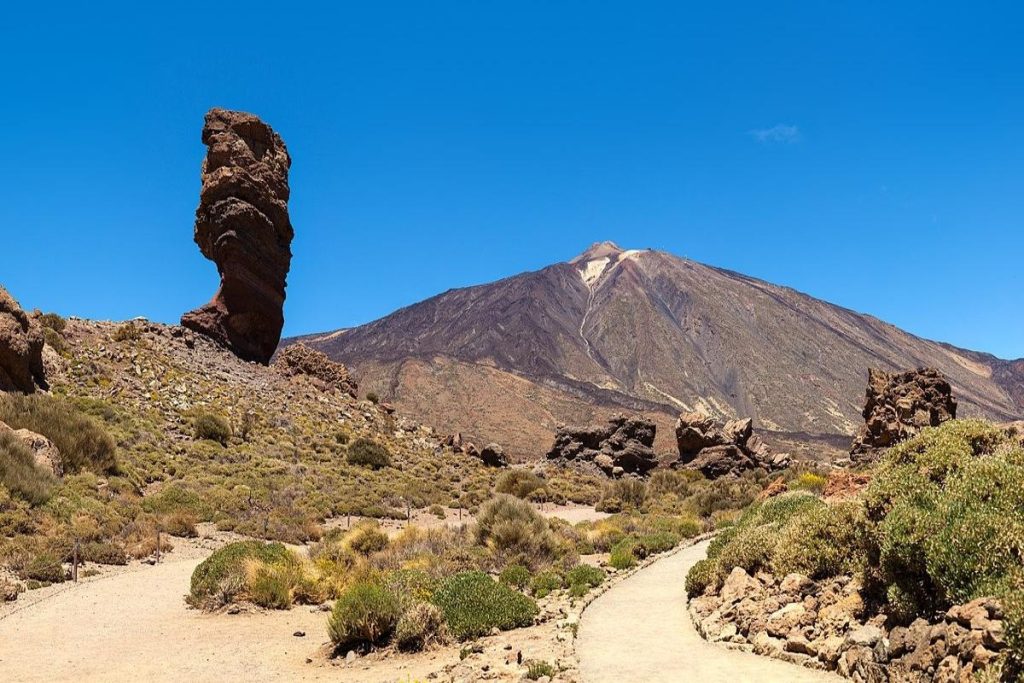
Mount Teide, symbol of Tenerife
Mount Teide, with its 3,718 meters of altitude, is the highest peak in Spain and a natural emblem that attracts thousands of visitors every year. Located in the heart of Tenerife, within the Teide National Park, declared a World Heritage Site by UNESCO, it represents one of the greatest tourist attractions in the Canary Islands. Climbing Mount Teide is not only a tourist plan, but an authentic experience in contact with nature and the geological history of the island.
This volcano not only offers breathtaking landscapes, but also the opportunity to understand the force of nature and enjoy panoramic views that reach, on clear days, as far as neighboring islands such as Gran Canaria, La Gomera or La Palma. For travellers arriving in Tenerife, especially those staying in a hotel chain, the Subida al Teide is an excursion that cannot be missed on your itinerary, as it combines adventure, culture and unique landscapes.
The article you have in your hands will show you everything you need to prepare for your visit: from the options for ascending to the essential permits, the best times and safety recommendations. Because if one thing is clear, it is that climbing to the roof of Spain is an unforgettable experience that requires preparation. With the right information, your Mount Teide will become one of the most memorable memories of your holiday in Tenerife.
How to prepare for your Mount Teide
Before embarking on the adventure, preparation is key to fully enjoying the Ascent of Mount Teide. Although many visitors think that being a tourist destination is an easy walk, the reality is that the altitude and terrain conditions require some planning.
First of all, equipment is essential: comfortable and breathable clothing, jacket or coat (even in summer, as temperatures drop considerably at the top), hiking shoes and sun protection. The sun in the high mountains is stronger than it seems and, combined with the altitude, can affect more than expected. In addition, it is always advisable to bring a hat, sunglasses, enough water and some light food.
Another important point is physical condition. The
Finally, you have to take into account the logistical planning: book the permits in advance, check the availability of the cable car (it may close due to wind or adverse weather conditions) and check the weather forecast before leaving. With these previous steps, your Teide climb will be much safer and more rewarding.
Options for the Teide Climb: on foot or by cable car
One of the most important decisions you will have to make when planning your Teide Ascent is how to do it: on foot or by cable car? Both alternatives are very different, but equally enriching.
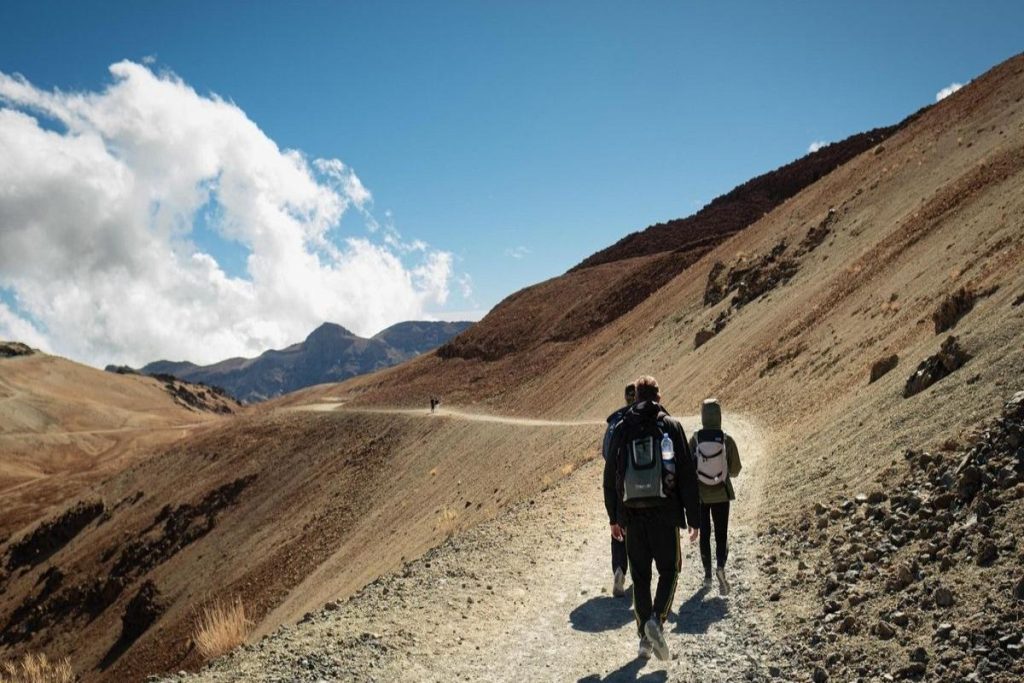
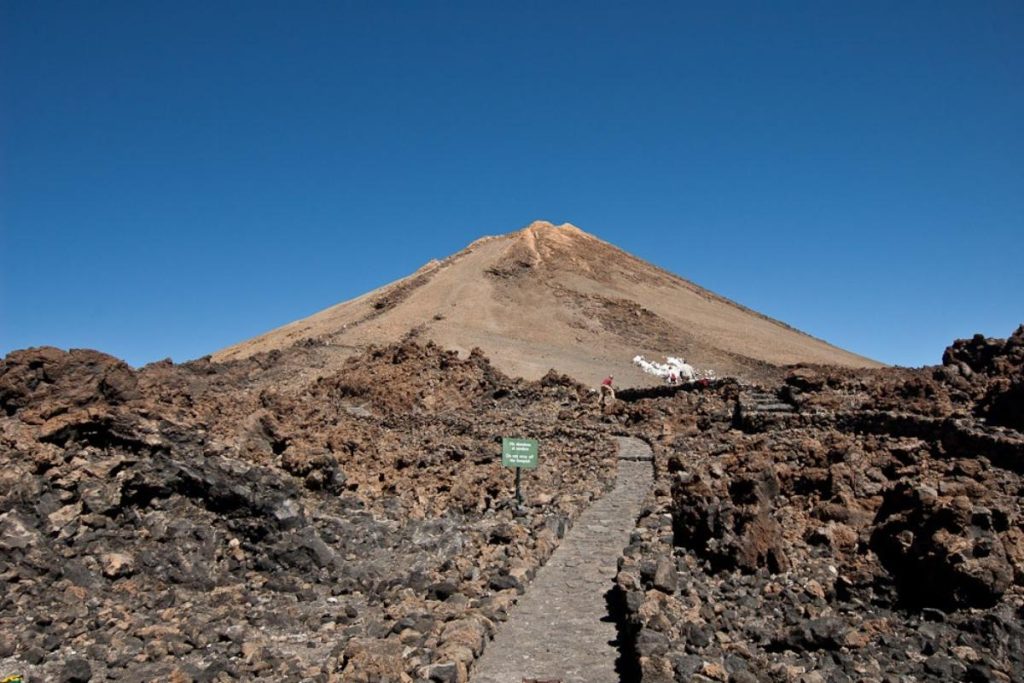
The walking option is intended for hiking and nature lovers. The most popular route is the Montaña Blanca route, which starts at an altitude of about 2,300 metres and ascends to the Altavista refuge, where many hikers rest before continuing to La Rambleta, at 3,550 metres. From there, only with special permission, you can continue to the crater. This tour offers the most authentic experience, with unique volcanic landscapes and the satisfaction of overcoming a physical challenge.
On the other hand, the most comfortable alternative is the cable car. In just eight minutes of travel you go from 2,356 meters at the base to 3,555 meters of altitude in La Rambleta. From this point there are several spectacular trails, and if you have the permit, you can reach the summit in a short but intense stretch on foot.
Choosing between these two options depends on the type of experience you’re looking for. Both the physical effort of the hiking and the comfort of the cable car make the Ascent to Mount Teide a unique experience that adapts to different visitor profiles.

Permits and regulations to get to the top
One of the most important aspects to take into account on your Teide Ascent is that to access the crater, the highest point in Spain, it is necessary to have a special permit. This regulation is due to the need to protect a fragile natural environment while ensuring the safety of visitors.
Access to the Telesforo Bravo trail, which connects La Rambleta (the upper station of the cable car) to the summit, is limited to 200 people per day. This means that permits sell out quickly, especially in high season, so it is ideal to book several months in advance through the official website of the Teide National Park.
The permit is free, but it requires selecting a specific date and time of access, which makes it necessary to plan the excursion well. Once there, the park rangers control access, so it is essential to carry the printed or digital authorisation along with an identification document.
For those who cannot obtain the permit, the experience is still incredible: from La Rambleta you can walk trails such as the one that leads to the Pico Viejo viewpoint or the one at La Fortaleza, which offer unforgettable panoramic views. In any case, the Subida al Teide is an adventure that is worth planning in advance to experience it in all its magnitude.
The Teide cable car experience
The cable car is, without a doubt, one of the most popular ways to do the Teide Climb. This modern means of transport allows you to overcome a difference in altitude of almost 1,200 metres in just eight minutes, offering spectacular views of the volcanic landscapes during the journey.
The base station is located at an altitude of 2,356 meters and has a car park, cafeteria and souvenir shop. From there, the cabins transport visitors to La Rambleta, at 3,555 metres, where a world of trails and breathtaking panoramic views opens up.
The cable car generally operates during the day, with schedules varying depending on the season, although it is advisable to book tickets in advance as demand is usually high. In addition, weather conditions, especially wind, can cause temporary closures, so it is advisable to check availability before planning your visit.
From the upper station, in addition to the possibility of climbing to the top with permission, you can access routes such as the Pico Viejo viewpoint, from which you can contemplate lunar landscapes and views of the neighboring islands. The experience is suitable for all types of visitors and allows you to enjoy the Ascent to Mount Teide without the need for great physical effort, becoming the favourite option for families and travellers looking for comfort.
Ascent of Mount Teide at sunrise and sunset
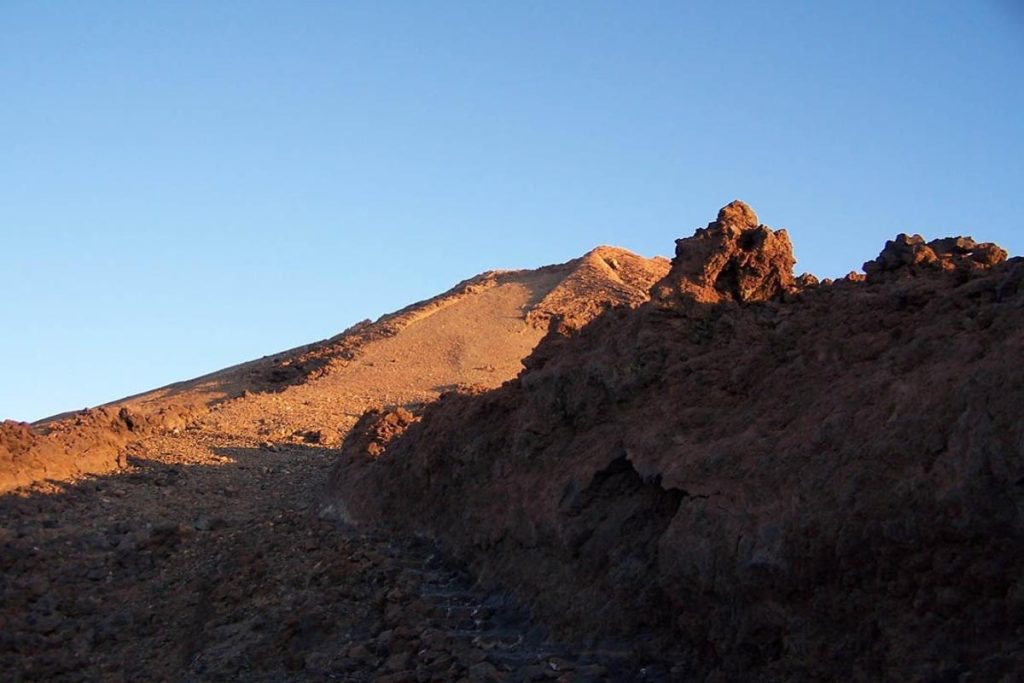
If there are magical moments to do the Ascent to Mount Teide, they are undoubtedly sunrise and sunset. These moments make the experience even more unforgettable thanks to the spectacle of colors that dye the sky and the feeling of being in a unique place in the world.
The sunrise climb is ideal for early risers and adventurers. Many hikers choose to spend the night at the Altavista Refuge, located at an altitude of 3,260 metres, to continue the ascent at dawn and reach the summit just in time to watch the sun rise through the clouds. The image of the sea of clouds illuminated by the first rays is one of the most impressive that can be experienced in Tenerife.
On the other hand, sunset offers a different atmosphere, with skies tinged with orange, red, and violet. In addition, from Mount Teide you can observe a fascinating optical phenomenon: the shadow of the volcano being cast over the sea and stretching towards the horizon.
Both experiences require good preparation and, in the case of sunrise, considerable physical effort. However, those who experience them agree that they are unique moments that make the Ascent to Mount Teide an almost magical experience, capable of thrilling even the most experienced travellers.
Safety tips and adaptation to altitude
The Ascent of Mount Teide is not without its challenges, especially because of the altitude. At more than 3,500 meters, the air is thinner and the atmospheric pressure lower, which can cause discomfort in some people. It is common to experience mild symptoms such as headache, dizziness or fatigue, known as altitude sickness.
To reduce these risks, it is best to take the ascent calmly, hydrate well and avoid sudden efforts. Those who choose to hike should be attentive to their physical condition and take frequent breaks. The cable car, by shortening the ascent time, can make the body feel the change in altitude more suddenly, so an adaptation time is also necessary when reaching the top.
Another key aspect is the weather. At the top of Mount Teide, the weather is unpredictable: it can be sunny, windy or even snowy in winter. Therefore, wearing appropriate clothing and checking the weather forecast is essential.
Finally, safety also means respecting the rules of the National Park, not leaving the marked trails and not picking up stones or flora. In this way, you not only guarantee your well-being, but you also contribute to preserving the environment. By following these tips, your Mount Teide will be a safe experience full of positive memories.
Conclusion: experience the Ascent of Mount Teide, an unforgettable memory
The Mount Teide is not only a tourist excursion, but an experience that connects with the essence of Tenerife. Whether on foot, enjoying the harshness and beauty of hiking, or by cable car, with the comfort of ascending in a few minutes, reaching the heights of the volcano is a unique experience.
The volcanic landscape, the contrasts of colors, the grandeur of the crater and the possibility of contemplating unforgettable sunrises and sunsets make this activity one of the most recommended for those who visit the island. In addition, planning, safety and respect for nature ensure that the experience is enriching and responsible.
Tenerife offers many attractions, but climbing Mount Teide is the jewel that crowns any trip. It doesn’t matter if you’re an adventurer looking for a challenge or a traveler looking for comfort, there’s an option for everyone. With the right information and the necessary preparation, the Teide Climb becomes the most special memory of your holiday on the island.